
ESG Global
A single tree can do more than put down roots.
It can absorb carbon dioxide, release oxygen, help hold the shoreline together and provide a place for aquatic life to grow. But for Brother Commercial (Thailand) Limited, the story of planting a tree goes beyond its environmental benefits. It is about creating a space where nature, people and communities can grow together.
That belief has been at the heart of Brother’s mangrove conservation and restoration initiative for 18 years.
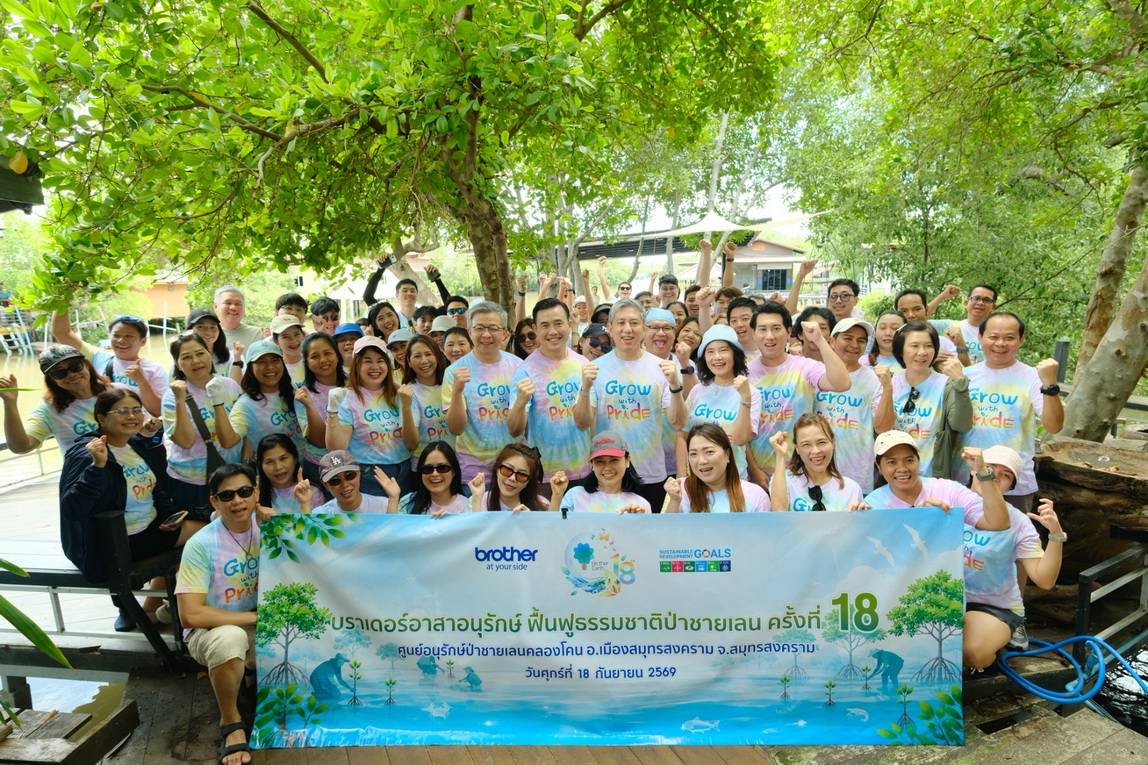
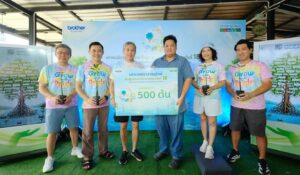
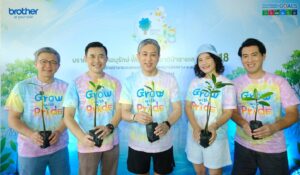
Most recently, the company brought together executives, employees, business partners, members of the media and local community members to plant another 500 mangrove trees in Khlong Khon, Samut Songkhram. With the latest planting, the number of trees planted and successfully growing in the project area has reached at least 2,100.
What began as an effort to restore green space has gradually grown into something broader: a long-term partnership between an organization, the local community and the ecosystem they share.
• From planting more trees to helping more trees survive
The road to 2,100 trees has not always been straightforward.
When Brother first began the project, the focus was on planting as many trees as possible. At one point, the team planted as many as 2,000 trees in a single round. But nature quickly showed that numbers alone were not enough.
The survival rate was less than 5%, largely because the young trees had to withstand natural disasters and monsoon conditions.
That experience changed the way Brother approached the project.
“Part of the success of this project has come from trial and error,” said Pornpuck Upaisilsataporn,
General Manager of Finance and Administration at Brother Commercial (Thailand) Limited.
“Over the past four years, we have shifted our focus from the number of trees planted to their survival rate. We reduced the number to 500 trees a year and began working more closely with the local community.”
The change has made a significant difference. Working with Paphatpong Rattanapongthara, who manages the Khlong Khon Mangrove Forest Conservation Center, Brother has achieved survival rates of more than 80% each year. Of the 2,000 trees planted across the past four planting cycles, more than 1,600 have survived.
The lesson is simple but important: restoring an ecosystem is not just about putting trees in the ground. It is about making sure they have the conditions—and the people—to survive.
• A forest needs people, too
Brother has been working in Khlong Khon for four consecutive years. Before that, the company had carried out planting activities in other locations, but a lack of people on the ground to care for the trees meant that waves and strong winds caused significant damage, leaving less than 5% of the trees alive.
In Khlong Khon, the approach is different.
The strength of the local community network has allowed Brother to work alongside people who understand the land and its changing conditions. Brother provides financial support and hires local residents to help care for the mangrove forest every month.
That local involvement also means the benefits of restoration extend beyond the trees themselves.
The mangrove ecosystem provides nursery grounds for aquatic life, while the surrounding area is home to cockle farms—an important source of income for local farmers. A healthier ecosystem therefore also supports the livelihoods of the people who depend on it.
Brother also makes a point of supporting the community during its activities by purchasing food and other products from local residents.
In this way, the project is not simply about restoring a forest. It is about strengthening the relationship between the environment and the people who live alongside it.
• Moving beyond CSR
After 18 years, the mangrove project has come to represent something larger than an annual CSR activity.
For Brother, it has become an opportunity to bring stakeholders together through shared, hands-on experiences—and to connect environmental action with the needs of the local community.
“Over the years, what has grown alongside the trees is our understanding that sustainability comes from the relationships between many interconnected lives—nature, communities, employees, partners and society,” Pornpuck said.
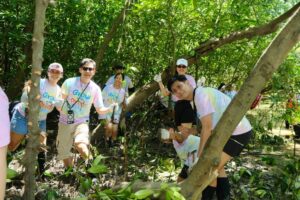
This year, Brother has brought that idea to life through the concept “Grow with PRIDE.”
The concept encourages people to think about growth in a broader sense—not simply as growth for an organization, but as growth that respects diversity, restores ecosystems and passes positive values on to future generations.
The project also connects with several United Nations Sustainable Development Goals, including SDG 3: Good Health and Well-being, SDG 13: Climate Action, SDG 14: Life Below Water, SDG 15: Life on Land and SDG 17: Partnerships for the Goals.
Together, these goals reflect the interconnected nature of the project: climate action, biodiversity, quality of life and collaboration cannot be viewed in isolation.
• Choosing the right tree for the right place
Successful restoration also depends on understanding the ecosystem itself.
At Khlong Khon, the community has chosen the small-leaved mangrove, a long-living hardwood species well suited to the area’s muddy, tidal environment.
Its supporting roots help anchor the soil and reduce coastal erosion, while its root system provides spawning and nursery grounds for aquatic life. Aerial roots that emerge above the mud help with air exchange and oxygen release, while the tree canopy provides habitat for monkeys and migratory birds.
For Paphatpong Rattanapongthara, who manages the Khlong Khon Mangrove Forest Conservation Center, Brother’s commitment stands out because it goes beyond the planting day itself.
The company follows up on the trees after they are planted and continues to provide funding for their care and maintenance.
That long-term commitment has contributed to a survival rate of around 80% among the 1,500 trees planted in the conservation area over the past three years.
• Planting is only the beginning
In a mangrove forest, even the way a seedling is planted can determine whether it survives.
The process begins with carefully removing the nursery bag without damaging the roots. The seedling should never simply be pushed straight into the mud. Instead, a hole is dug beside a supporting stake, roughly one hand-width deep, before the seedling is gently placed inside without pressing or squeezing its roots.
The trunk is then tied to the stake to prevent the young tree from being swept away by the tides.
The support remains in place for around two to three months, giving the roots time to establish themselves. The seedlings are then monitored over the following six months to a year, with staff and local residents checking the trees, maintaining them and replacing those that do not survive.
It is a reminder that meaningful environmental action rarely happens in a single day.
Planting may take only a few minutes. Helping a tree survive requires months of care. Restoring an ecosystem takes years. And creating lasting change requires people to keep showing up.
• Growing with the ecosystem
The world of business is increasingly moving beyond a simple question: How much can an organization reduce its environmental impact?
The bigger question is becoming: How can an organization help nature become stronger again?
For Brother, the answer can begin with something as simple as planting a tree—but it cannot end there.
The real measure of success is whether that tree grows within a healthy ecosystem; whether the surrounding community sees value in protecting it; whether people are willing to care for it; and whether an organization is prepared to remain committed for the long term.
After 18 years, Brother’s mangrove journey suggests that sustainable growth is not about growing alone.
It is about growing together—with nature, with communities and with the generations that come next.
#Brother #ESGGlobal