
ESG Global
“The main occupation of people in Ban San Chao, Taphong Subdistrict, Mueang Rayong District, Rayong Province, is durian farming. Before the Khao Yai Da watershed forest restoration project began in 2007, water shortages made it impossible for us to control or determine when our crops would produce yields. We simply had to leave everything to nature and fate. After joining the project initiated by SCGC and its network partners, farmers now have sufficient water throughout the year. Average household incomes have clearly increased, and we have established a stable village water-supply management system that generates approximately 20,000 baht in monthly income for the village.”
“One of the key tools behind this success is ‘data’—both information recorded by relevant agencies and data collected by the community. These data are analyzed and transformed into a compass guiding us toward precision agriculture.”
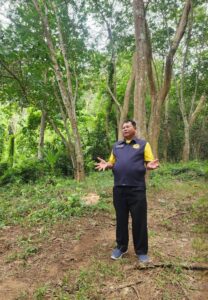
Songkran Phongmee, village headman of Moo 11, Taphong Subdistrict, Mueang Rayong District, Rayong Province, said that in the past, residents of Moo 11, also known as Ban San Chao, had extensive farmland but faced serious difficulties due to water shortages for both agriculture and household use. Every household had to purchase tap water and have it transported in from outside the area.
Therefore, in 2007, when they learned that SCG Chemicals Public Company Limited, or SCGC, was inviting interested communities to participate in The Khao Yai Da Watershed Forest Restoration Project—a vital water source for local residents—they immediately decided to attend the project briefing and join the initiative.
“We saw how the company approached the community. It focused on educating local residents so that they could apply and build upon that knowledge on their own. This matched our own approach: we wanted to be taught how to fish for ourselves rather than simply being given fish.This kind of support enables us to become self-reliant and promotes sustainable development for the community and the village.”
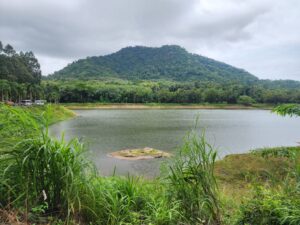
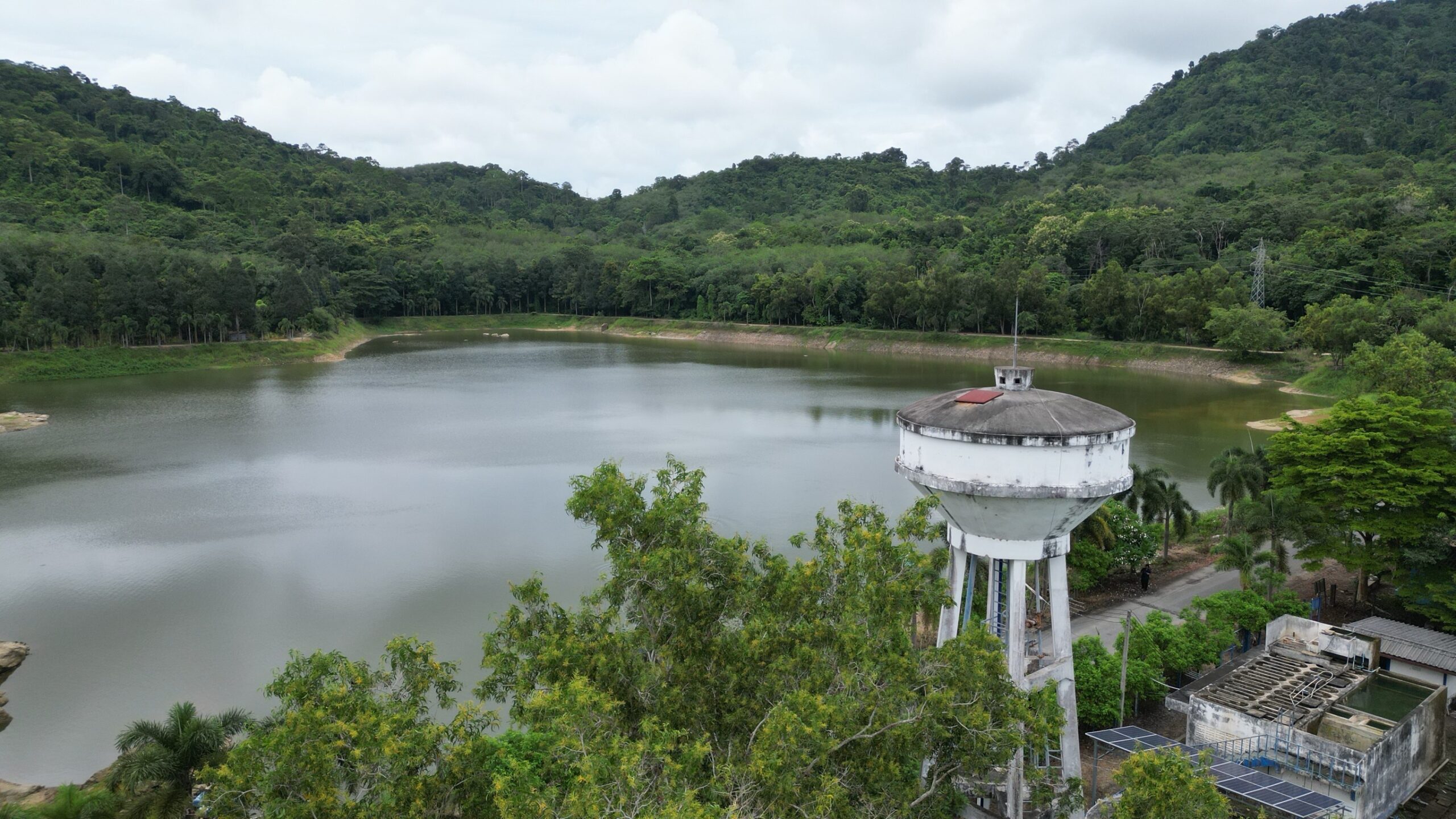
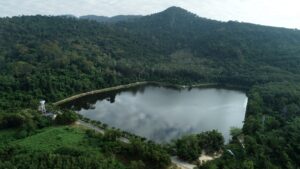
According to empirical data, during the first five years of the project, 5,000 check dams were constructed around Khao Yai Da. By 2012, signs of forest recovery had begun to emerge. Huai Hin Dat Reservoir, an important source of agricultural water covering six subdistricts that had previously dried up during the dry season, also began to recover.
Water—the community’s essential capital—had returned. The project therefore continued to build additional check dams, reaching 7,600 dams to date. Inspection and maintenance have been carried out continuously in cooperation with community members.
Under the project’s collaborative approach, SCGC serves as a partner in planning and a supporter. The company helps develop ideas and frameworks, while the community takes responsibility for implementation and management to ensure long-term sustainability.
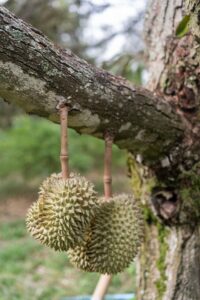
The village headman emphasized that water is truly the heart of agriculture in the area. He gave the example of a durian tree bearing large fruit that is only one month away from harvest. If a water shortage occurs at that stage, the tree may begin shedding all its leaves in order to preserve the fruit.
However, if the drought continues for too long and the tree can no longer survive, both the durian fruit and the tree itself may dry up and die before the farmers have a chance to harvest the crop.
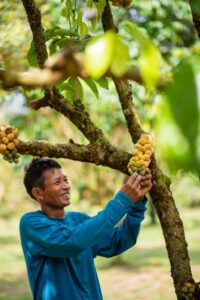
Therefore, the most important aspect of fruit farming is calculating the water supply in proportion to the cultivated area. This is one of the key reasons why The Khao Yai Da Watershed Forest Restoration Project places great emphasis on constructing large numbers of check dams in the watershed forest. These dams help retain water and prolong moisture in the soil, alongside continuous maintenance and repairs.
“When the project first began, I was not yet the village headman. But after attending the meetings and seeing that the benefits would genuinely belong to the public and be shared by the entire community, my team and I helped residents understand the long-term benefits.”
“This work requires ‘heart.’ We must first show genuine care and commitment to the villagers. Only then can we talk with them and explain how the company’s proposed project would benefit the community as a whole.”
• Community Water Management Driven by Data
Headman Songkran said that the Royal Forest Department’s research unit sends officials to collect data and statistics every week. The data focus on water levels, soil conditions, and moisture in the forest.
The officials also collect comparative data on soil erosion between healthy, undisturbed forest areas and areas that have been encroached upon and degraded. The information shows how much soil is lost in each type of area after rainfall and reflects the level of forest fertility each year.
“The direct benefit received by local residents is that Dr.Pongsak Witawatjutikul, Former Expert in Watershed Conservation and Management, Department of National Parks, Wildlife and Plant Conservation and an adviser to SCGC’s watershed forest restoration project, brought this knowledge to the community.”
“He trained villagers in how to collect water-related data and use it as a basis for calculating and planning the care of their fruit orchards.”
For example, villagers learned whether additional irrigation was necessary after a certain amount of rainfall. They also learned how to calculate heavy rainfall in terms of litres per square metre and use that information to adjust the amount of water supplied to their trees accurately.
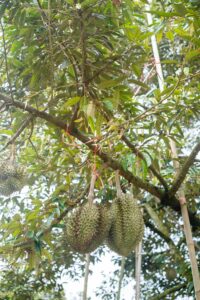
“A durian tree, for instance, requires a specific number of litres of water per day. Keeping statistical records has made farmers’ irrigation and orchard management more precise and more closely aligned with scientific principles.”
At the same time, farmers in the area systematically collect data and maintain records in their orchards. This helps improve fruit-orchard management and ensure that farming practices are carried out correctly and systematically.
The approach is based on advice from specialists:
“Before our produce reaches consumers at a high value, the management process at the beginning of the supply chain—inside our orchards—must first be effective and meet the required standards.”
This represents an important turning point in the community’s sustainable response to the crisis of declining crop prices. “In this day and age, we can no longer rely solely on traditional farming methods passed down from our grandparents without using data. We need to apply scientific knowledge as a guide.”
“During the training, Dr. Pongsak, the project adviser, organized group-based learning sessions until we completed the course. He also provided the community with tools and equipment for measuring various indicators so that we could apply the knowledge in our actual work. Part of the budget was supported by SCGC.”
Today, durians are the village’s primary agricultural product. The second major crop, which is growing rapidly and generating substantial income for farmers in Rayong, is Marian plum, locally known as ‘Maprang Wan’.
Its particular advantage is that it can reach the market earlier than produce from other areas. Although Marian plum generally requires less water than many other fruit trees, an effective water system can serve as an important supplement.
When fertilizer is applied and the trees receive an appropriate amount of water during the fruiting period, the trees can absorb nutrients more quickly. As a result, the fruit develops faster and becomes visibly larger than usual. This is another part of the knowledge the community has acquired.
• Expanding the Initiative to Build a Stable Village Water System
Headman Songkran said that another source of happiness and pride for Ban San Chao is the transformation from having to purchase water for household consumption to having its own water-supply system.
After The Khao Yai Da Watershed Forest Restoration Project had been operating for five years, Moo 11 established its own water-supply system and developed stable water-management operations. The system also generates approximately 20,000 baht in monthly income for the village.
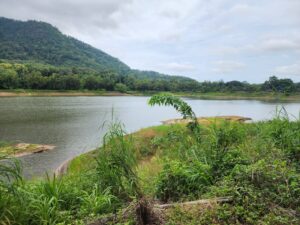
“The village water-supply system was established in 2009, but I began helping to manage it in 2012. We started from scratch and were nearly 20,000 baht in debt to a construction-materials shop after borrowing equipment to improve the system and provide water for residents. It took us approximately three months to clear the debt. In the past, villagers had to spend their own money to purchase water for drinking and household use. Today, we charge a very low rate of only seven baht per unit.”
Previously, villagers had to struggle to find and purchase their own water. Later, a project was developed to divert water from Dok Krai Reservoir in Pluak Daeng District to a check dam in Khlong Tha Krasao, Mueang Rayong District.
“The water was then diverted from Khlong Tha Krasao and stored in the village’s holding reservoir. The success of our village water-supply system—having water available throughout the year—is rooted in the abundance of Huai Hin Dat Reservoir.”
“The reservoir receives water from the Khao Yai Da watershed forest and serves as an important storage source for farmers. This has given us a greater sense of security and confidence in our agricultural work because we no longer have to worry about insufficient water.”
Ban Mab Chan : Origin, Inspiration, and the “Living Check Dams”
“The journey began in 2007, when community leaders from Ban Mab Chan, Klaeng Subdistrict, Rayong Province, reached out to SCG Chemicals (SCGC) to seek support and knowledge in building check dams—an effort to restore the once-dry Khao Yada, an important watershed that sustains local farmers and their livelihoods. This initiative marked the beginning of the ‘Khao Yada Watershed Forest Restoration Project,’ bringing together SCGC, the local community, and partner networks. Together, they strengthened the community’s capacity to manage its water resources independently and sustainably.”
“Today, the project has evolved into a model for sharing knowledge and building ‘water resilience’ across other agricultural areas—helping farmers increase agricultural productivity, improve household incomes, and create new opportunities for sustainable livelihoods. This success clearly demonstrates that ‘water security’ can build the resilience and long-term security of a community.
Wandee Inprom (Kamnan Wandee), Subdistrict Headwoman and representative of the Ban Mab Chan Community Water Management Group, Rayong explained that the journey to solving the community’s water issues began when she saw SCG’s water management and check-dam projects in Lampang on television. She decided to reach out for assistance through Forestry Department officers, even though SCGC’s factory was located far away in Map Ta Phut, Rayong. The collaboration was agreed upon in less than half a month because SCGC was already prepared to support projects aligned with the Royal Initiatives.
At the starting phase, residents from all 11 villages (comprising a population of over 1,600 people) joined the project without any hesitation. This was deeply inspired by the prestige and royal initiatives of King Rama IX, as the villagers yearned to see Khao Yai Da return to being lush and fertile like the royal project areas they saw on TV.
Today, the community has successfully transformed Khao Yai Da into “Khao Pho” (Father Mountain), driven by the inspiration created by ‘Father’. Kamnan Wandee expressed deep gratitude for His Majesty’s philosophy on “living check dams” (ฝายมีชีวิต), which teaches that even if a check dam is damaged or “dies,” the community can always join hands to repair it and bring it back to life.
Because there were no public water reservoirs or public dams in the area, the 284 households in the subdistrict relied entirely on groundwater and mountain water for agriculture and daily consumption. To determine their actual water capital, Kamnan Wandee initiated a survey where villagers from 6 community clusters (คุ้มบ้าน) went out to inspect their local wells and canals in detail. They measured the width, length, and depth of each well to calculate the water volume of each household, compiling the data into a “hand-made map”. This gave the community an accurate picture of their total water assets.
Even today, the community continues to record daily water data and average temperatures to pass down to future generations. Every morning, they report water levels across 4 key locations and rainfall measurements via a network group to keep all villagers fully informed of their water situation.
To build resilience against droughts, the community held public forums to establish mutual rules, limiting each household’s water usage to 30 units per month. During the dry season, the system alternates the water supply by shutting off and opening valves for individual alleys (e.g., closing an alley from 7:00 AM today until 7:00 AM the next day) to allow households to take turns pumping water into backup tanks. Every household agreed to purchase and prepare these backup tanks.
Furthermore, the community chose not to rely on the provincial waterworks system due to concerns over insufficient water pressure that could burst pipes, as well as worries about muddy red water or sudden outages. Instead, they chose self-reliance through a village water system powered by groundwater, costing only 10 THB per unit (compared to the provincial rate of 17 THB per unit). Kamnan Wandee also set up a rainwater harvesting system utilizing 4 large roof-connected water tanks to collect rainwater into a well, serving as a model of self-reliance for other villagers to follow.
Kamnan Wandee highlighted the immense benefit of having collaborative partners, emphasizing that the community must first propose its own ideas and needs so external organizations know where to support. A key example is their partnership with Hydro – Informatics Institute (HII), which bridged the community’s technical gaps in water engineering. Since the villagers lacked expertise in analyzing the elevations along their 8-kilometer-long canal, building a check dam too high risked flooding upstream properties. HII stepped in to measure these elevations, enabling the community to build check dams at appropriate and safe locations.
For construction and maintenance, volunteers and local organizations (such as factories from Map Ta Phut and local groups from Chiang Rai) regularly rotate to help. Additionally, Kamnan Wandee has a unique quality-test for check dams: after construction, 10 to 12 people must stand in a row on the dam for a photo to test its weight capacity. If the dam does not sag or collapse, it is certified as meeting their standards of strength.
Systematic water management has restored the area’s water supply to 100% capacity, prompting farmers to convert their lands entirely into durian orchards, now spanning over 8,000 rai. This abundance allowed them to shift their business model to selling “ripe durians” directly to consumers at 100 THB per kilogram, which yields a far better price and weight than selling raw durians in bulk to middlemen.
They heavily market their “ancient durians” (some over 70 years old), which are famous for their thin peels and sticky, rich texture. Through training provided by SCGC, local youth have learned digital marketing and e-commerce, allowing them to connect with consumers online and even travel to sell durians in Bangkok, earning over 100,000 THB in just a two-night trip.
Beyond durians, the community practices mixed-fruit farming, grows a “5-level forest” alongside herbs, and runs a community enterprise for processed goods, such as “Banana Chips,” which are fried immediately after harvesting for ultimate freshness. They also generate extra income through experiential homestay tourism, where tourists live with hosts, harvest herbs, and learn to cook local dishes or curry paste. Kamnan Wandee always teaches villagers never to put money first, but to prioritize honesty, responsibility, and service from the heart.
Looking forward, Kamnan Wandee’s goal is to see the younger generation learn and inherit the water database, canals, and well records to manage family farms and further develop the community enterprise to sell high-quality processed products. This ensures sustainable, self-reliant careers for the youth without needing to find employment elsewhere or rely on middlemen.
They have also successfully mentored the Ban Hua Thung community using the “2 Cultivate 2 Collect” Model which comprises of Cultivating Human Potential, Cultivating Rules, Collecting Water Resources, and Collecting Data, helping them secure year-round water for 300 rai of agricultural land benefiting over 90 households.
The distance from the upper water-supply system to the reservoir is approximately 2.5 kilometres, while the reservoir is another 2.5 kilometres from the road-level area. The difference in elevation provides an important advantage: water can flow downhill naturally through gravity without relying on electric water pumps. This has resulted in substantial energy-cost savings.
SCGC has also supported the installation of a solar-cell system to help produce tap water. During sunny periods, solar energy is used to operate the system. When there is insufficient sunlight, the system switches to conventional electricity, generating even more cost savings.
• Strengthening Water Security and Community Power
Moo 11 currently has a population of nearly 400 people. In addition to benefiting directly from the restoration of water resources in Huai Hin Dat Reservoir for their main occupation of farming, residents also earn supplementary income from rubber tapping in the Khao Yai Da conservation forest.
They also earn income through the construction and maintenance of check dams. On average, each check dam requires maintenance every two years. All 7,800 check dams in the Khao Yai Da watershed forest were built using natural materials such as wood, bricks, and soil in order to preserve the ecosystem.
“In addition to employment and supplementary income, the clearest benefit we have gained is the unity of the people in the village. Without the watershed forest restoration project as a central platform, we would not have been able to bring so many people together, and we would never have known how many residents were ready to cooperate with us.”
Once the project was established, villagers responded very positively. As a result, whenever there is a development project for the benefit of the village, everyone is willing to come out and help wholeheartedly.
“Today, I can confidently say that among the 16 villages in Taphong Subdistrict, Moo 11 has the largest number of residents participating in village development.”
At the same time, the forestry authorities allow villagers to earn a living by tapping rubber trees in the Khao Yai Da area. As village headman, Songkran regularly reminds residents to help protect the land where they work.
They are strictly prohibited from using herbicides or spraying chemicals because doing so would damage the forest and constitute improper conduct. The villagers have cooperated well, and a shared sense of public responsibility has also emerged, particularly in monitoring and preventing forest fires.
• Positioning Ban San Chao as a New Coffee-Growing Area
Headman Songkran said that the community is currently developing a plan to organize local residents into groups and distribute coffee seedlings for intercropping among the rubber trees.
Because rubber trees in the forest area cannot be felled, planting coffee as an additional economic crop could provide villagers with another stable source of supplementary income.
The community has already begun discussing the idea with SCGC and the advisers to the watershed forest restoration project. They have recommended growing coffee as an intercrop or supplementary crop.
“Previously, I worked with SCGC on a project to grow coffee among durian trees. The results were very good and the approach met our needs well. However, coffee and durian trees cannot coexist over the long term. Coffee can grow very well alongside rubber trees.”
As the next step, the community plans to prepare a proposal requesting budgetary support from SCGC to procure coffee seedlings for local residents. The proposal will also cover knowledge development and the allocation of specialists to advise villagers on how to grow and care for the coffee plants to achieve the best possible yields.
In addition to SCGC’s network, the Department of Agricultural Extension has also regularly connected with and supported collaborative work with the village.
Headman Songkran concluded:
“I believe His Majesty the King’s royal initiatives concerning forests and water resources are truly outstanding and remarkably wise. If villagers work together and follow the principles of the King’s philosophy, we will never go hungry. The full benefits we have received are largely because our village is located next to the mountains and the forest watershed that feeds the check dams. This is the heart of our lives and livelihoods.”
#SCGC #BanSanChao #Rayong #ESGGlobalbiz